
A Guide to Breast Cancer in Men: From Risk Factors to Preventive Measures
Medically reviewed by Dr Johann Tang, Senior Consultant Radiation Oncologist
Breast cancer is often associated with women, but men can develop breast cancer too. Although male breast cancer accounts for less than 1% of all breast cancer cases, awareness remains important because delayed diagnosis is common.
Recognising the early symptoms of breast cancer in men and seeking prompt medical attention can improve treatment outcomes. In Singapore, developments in cancer treatment, including surgery, radiotherapy, chemotherapy, and hormone therapy, have expanded the range of care options available for men diagnosed with the condition.
This guide explains the symptoms, causes, risk factors, screening recommendations, and treatment options for male breast cancer in Singapore.
Key Takeaways
- Breast cancer can occur in men, and early awareness helps support timely diagnosis.
- A breast lump, nipple changes, or unusual discharge should be checked by a doctor promptly.
- Genetics, age, hormonal changes, and lifestyle factors can increase the risk of male breast cancer.
- Treatment may include surgery, radiotherapy, chemotherapy, or hormone therapy, depending on the cancer stage.
- Seeking medical attention promptly can support earlier diagnosis and help guide appropriate treatment.
What Is Male Breast Cancer?
Male breast cancer occurs when abnormal cells grow uncontrollably in the breast tissue of a man. Although men have much less breast tissue than women, they still possess milk ducts and surrounding tissue where cancer can develop.
Most cases begin in the ducts located behind the nipple area. Without early detection, cancer cells may spread to nearby lymph nodes or other parts of the body.
How Common Is Breast Cancer in Men?
Male breast cancer is considered rare, but the number of diagnosed cases has gradually increased over the years due to greater awareness and improved detection.
Because many men do not expect breast cancer symptoms, diagnosis is often delayed until the cancer has progressed further. This makes education and awareness especially important.
Types of Breast Cancer in Men
1. Invasive Ductal Carcinoma (IDC)
Invasive ductal carcinoma is the most common type of breast cancer in men. It begins in the milk ducts and spreads into nearby breast tissue.
If left untreated, IDC can spread to the lymph nodes and distant organs.
2. Ductal Carcinoma In Situ (DCIS)
DCIS is an early-stage, non-invasive breast cancer where abnormal cells remain confined inside the milk ducts.
Because it has not spread into surrounding tissue, treatment is often less extensive than for invasive breast cancer.
3. Invasive Lobular Carcinoma (ILC)
Invasive lobular carcinoma starts in the lobules, which are glands involved in milk production.
Since men naturally have very little lobular tissue, this form of male breast cancer is uncommon.
Other Rare Forms
Less common breast cancers in men include:
- Paget’s disease of the nipple
- Phyllodes tumours
- Breast sarcomas
Symptoms of Breast Cancer in Men
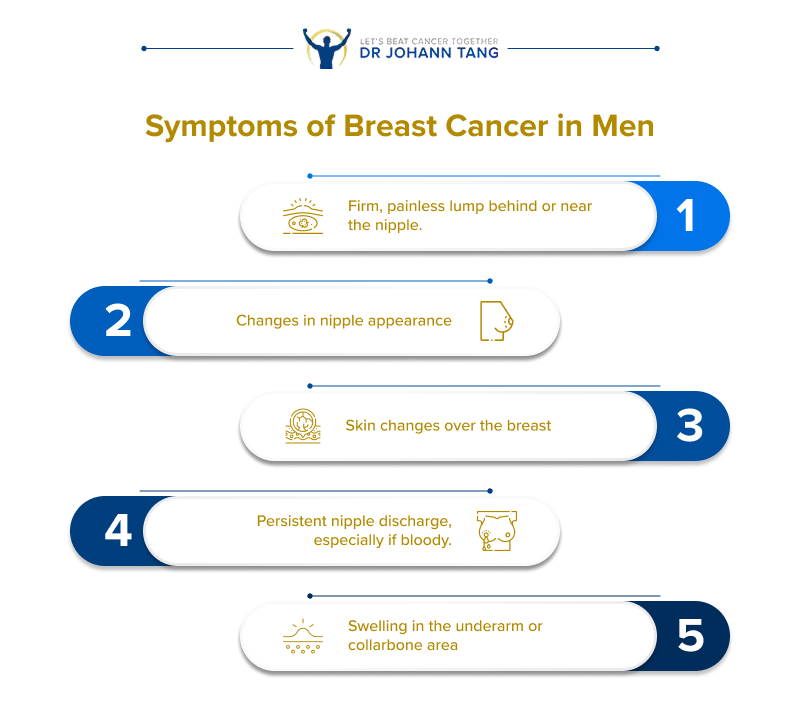
Early detection begins with recognising unusual breast changes.
Common Male Breast Cancer Symptoms
Lump in the Breast
A firm or painless lump behind or near the nipple is one of the most common signs of male breast cancer.
Nipple Changes
Watch for:
- Nipple inversion
- Flattening
- Scaling
- Crusting
Skin Changes
Changes in the skin over the breast may include:
- Redness
- Thickening
- Dimpling
- Puckering
Nipple Discharge
Bloody or unusual nipple discharge should always be medically evaluated.
Swollen Lymph Nodes
Swelling in the underarm or collarbone region may indicate lymph node involvement.
While some symptoms may be caused by non-cancerous conditions, persistent changes should never be ignored.
What Causes Breast Cancer in Men?
Male breast cancer develops due to genetic, hormonal, and environmental factors that lead to abnormal cell growth in breast tissue.
In many cases, no single cause is identified. However, several known risk factors may increase the likelihood of developing breast cancer.
Risk Factors for Male Breast Cancer
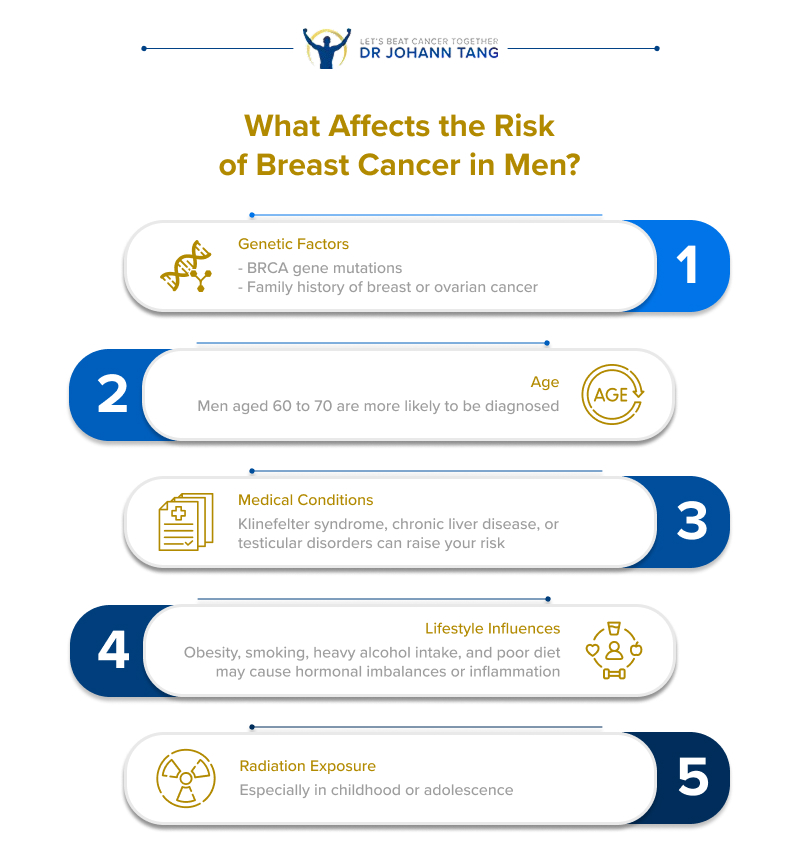
1. Genetic Mutations
Inherited BRCA1 and BRCA2
gene mutations significantly increase breast cancer risk in men.
Men with a family history of:
- Breast cancer
- Ovarian cancer
- Prostate cancer
may wish to undergo genetic counselling or testing.
2. Older Age
Most cases of breast cancer in men are diagnosed between ages 60 to 70.
As people age, DNA damage accumulates naturally, increasing cancer risk over time.
3. Hormonal Imbalances
Conditions that increase oestrogen levels may raise the risk of male breast cancer, including:
- Klinefelter syndrome
- Liver disease
- Testicular disorders
4. Obesity and Lifestyle Factors
Obesity, smoking, heavy alcohol consumption, and poor dietary habits may contribute to hormonal changes and chronic inflammation linked to cancer development.
5. Prior Radiation Exposure
Men who previously received chest radiation therapy for other medical conditions may face a higher long-term breast cancer risk.
When Should Men See a Doctor?
You should seek medical attention if you notice:
- A breast lump lasting more than two weeks
- Bloody nipple discharge
- Persistent breast pain
- Skin dimpling or thickening
- Swelling under the arm
Early evaluation can help detect cancer at a more treatable stage.
Can Breast Cancer in Men Be Prevented?
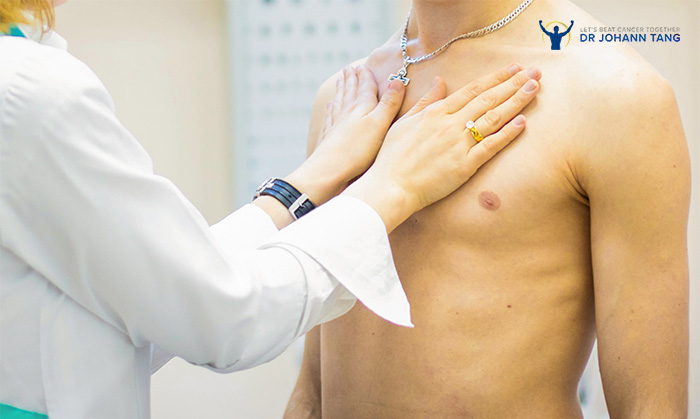
Although not all cases can be prevented, several steps may help lower risk and support early detection.
Know Your Family History
Men with strong family histories of cancer should discuss their risk profile with a doctor.
Maintain a Healthy Lifestyle
Regular exercise, weight management, limiting alcohol intake, and avoiding smoking may help reduce cancer risk.
Perform Regular Self-Checks
Monthly self-examinations help men become familiar with normal breast tissue and notice changes earlier.
Attend Recommended Screenings
Higher-risk individuals may require regular clinical breast examinations or imaging assessments based on medical advice.
How Is Male Breast Cancer Diagnosed?
Doctors may use several methods to diagnose breast cancer in men, including:
- Physical examination
- Mammography
- Ultrasound imaging
- Biopsy
- MRI scans in selected cases
Once diagnosed, additional tests help determine the cancer stage and guide treatment planning.
Treatment Options for Male Breast Cancer in Singapore
Breast cancer treatment in Singapore depends on:
- Cancer stage
- Tumour size
- Hormone receptor status
- Overall health condition
Treatment plans are tailored individually.
Early-Stage Breast Cancer Treatment
Surgery
Surgery is often the main treatment for early-stage male breast cancer.
Options may include:
- Mastectomy
- Breast-conserving surgery (lumpectomy) in selected cases
Radiotherapy
Radiation therapy helps destroy remaining cancer cells after surgery.
Techniques such as:
- Intensity-modulated radiotherapy (IMRT)
- Image-guided radiotherapy (IGRT)
- Accelerated partial breast irradiation (APBI)
are designed to target the treatment area while limiting radiation to surrounding healthy tissue
Hormone Therapy
Many male breast cancers are hormone receptor-positive, making hormone-blocking medication an important treatment component.
Chemotherapy
Chemotherapy may be recommended for:
- Larger tumours
- Lymph node involvement
- Higher-risk cancer features
Treatment for Locally Advanced Breast Cancer
Neoadjuvant Chemotherapy
Chemotherapy may be given before surgery to shrink the tumour and improve surgical outcomes.
Mastectomy and Lymph Node Surgery
More invasive cancers often require mastectomy and evaluation of lymph nodes under the arm.
Adjuvant Therapy
Additional treatments after surgery may include:
- Hormone therapy
- Chemotherapy
- Targeted therapy, such as Proton therapy
- Radiotherapy
Stage IV Male Breast Cancer Treatment

When breast cancer spreads to distant organs, treatment focuses on disease control and symptom management.
Systemic Therapies
Options include:
- Chemotherapy
- Hormone therapy
- Targeted therapy
Palliative Radiotherapy
Radiotherapy may help relieve:
- Bone pain
- Pressure symptoms
- Neurological symptoms from metastatic disease
Supportive Care
Comprehensive supportive care may include:
- Pain management
- Nutritional support
- Rehabilitation
- Emotional support services
Frequently Asked Questions About Male Breast Cancer
Is breast cancer in men curable?
When diagnosed at an earlier stage, male breast cancer may have a wider range of treatment options. Treatment recommendations depend on the cancer stage and tumour characteristics.
Can men survive breast cancer?
Yes. Earlier diagnosis can influence treatment planning, although each person’s prognosis is unique.
Is a breast lump in men always cancer?
No. Many breast lumps are non-cancerous, but all persistent lumps should be medically evaluated.
Does male breast cancer come back after treatment?
Recurrence is possible, which is why regular follow-up appointments remain important after treatment.
How much does breast cancer treatment cost in Singapore?
Costs vary depending on the treatment type and stage of cancer. Financial support schemes such as MediSave may help offset selected cancer treatment expenses.
Conclusion
Although breast cancer in men is rare, awareness remains essential. Understanding the symptoms, risk factors, and treatment options can help men recognise when to seek medical attention and make informed decisions about their care.
Men who notice unusual breast changes should seek medical advice promptly rather than waiting for symptoms to worsen.
If you are concerned about male breast cancer symptoms or have questions about screening or treatment options, consult Dr Johann Tang to discuss your individual circumstances and the next steps for assessment and care.
Related Articles
Read this next ...
-

Hearing that cancer has returned can bring about a mix of emotions, from fear and confusion to uncertainty and sadness. However, understanding the facts surrounding cancer recurrence can provide clarity and help you manage the situation with the right approach. While this news can be unsettling, there are strategies in place for handling it, and understanding what happens next is key to making informed decisions about care and treatment.
-

While conventional cancer treatments like chemotherapy, radiation, and surgery are the foundation of cancer care, many patients seek additional options to support their recovery and well-being. Complementary and alternative therapies have become increasingly popular for managing treatment side effects, strengthening the immune system, reducing stress, and improving overall quality of life. These therapies are often used alongside standard treatments, offering cancer patients a holistic approach to managing their health.
-

Breast cancer occurs when breast cells begin to grow abnormally. These cells divide more rapidly than healthy cells and continue to accumulate, forming a lump or a mass.


Dr Johann Tang
Senior Consultant Radiation Oncologist
Medical Director of ME Novena Specialist Group Pte Ltd
MBBS (Aust), FRANZCR (Radiation Oncology)
Dr Johann Tang is the Senior Consultant and Medical Director of ME Novena Specialist Group Pte Ltd. at Mount Elizabeth Novena Hospital and an Assistant Professor at the Yong Loo Lin School of Medicine, National University Singapore.
Why Choose Dr Johann Tang for Cancer Treatment in Singapore
Dr. Johann Tang is a radiation oncologist and cancer doctor in Singapore providing radiation therapy and cancer treatment for different types of cancers. Treatment plans are developed based on the patient’s diagnosis, cancer type, and medical condition. Radiation therapy techniques and treatment options are discussed during consultation, together with follow-up care and treatment planning for patients undergoing cancer treatment in Singapore.
"I guarantee my very best expertise delivered with compassion and dignity as we journey TOGETHER to BEAT this dreaded illness."
Make An Enquiry
Got Queries? Book an appointment with Dr Johann Tang by filling up this form. We'll get on a call with you as soon as possible.
Prefer to talk? Call us directly at +65 6690 6811
or email us at drjohanntang@gmail.com
