
The Different Stages of Cancer and Their Treatments
Medically reviewed by Dr Johann Tang, Senior Consultant Radiation Oncologist

Are you or someone close to you facing a cancer diagnosis? While there isn’t a definitive cure for cancer, advancements in medicine offer various treatments to stop its growth, prevent metastasis, and, in many cases, eliminate it entirely. The key to effective treatment lies in understanding the stages of cancer and tailoring therapies accordingly.
Let’s explore the different stages of cancer and the treatment options available at each phase.
1. Stage 0 and I: Early Detection and Localised Treatments
Stage 0 and Stage I cancers are often the earliest stages, characterised by tumours confined to a single area and minimal or no spread to nearby tissues. At this point, early detection plays a pivotal role in successful treatment outcomes.
For Stage 0 and 1 cancer treatment, surgery mainly or sometimes combination surgery followed by localised radiation may be employed to remove or destroy the cells. These are mainly in breast, cervical cancers or endometrial cancers.
In some cases, radiation therapy may be suggested by your cancer doctor as well to ensure no residual cancerous cells remain. These localised treatments are designed to be minimally invasive while maximising the chances of total remission.
2. Stage II and III: Regional Spread and Combination Therapies
Stage II and III cancers indicate a progression where the tumour has grown larger or spread to nearby tissues with lymph node involvement. Combination therapies are often necessary to address the complexity of the disease.
Depending on the type of cancer, treatment can be either using surgery first followed by chemoradiation, or using chemoradiation alone to treat the cancer.
For surgery followed by chemoradiation, there are usually in head and neck cancers, breast cancers and endometrial cancers It usually begins with surgery to remove the tumour and affected lymph nodes. Post-surgical treatments often include chemotherapy to target any remaining cancer cells and reduce the risk of recurrence. Radiation therapy may also be used to destroy localised cancer remnants or manage symptoms. The combination of these modalities increases the chances of eradicating the cancer while preventing further spread.
Sometimes when the tumor is large and surgery is difficult, chemotherapy and radiation is sometimes used to shrink the tumor to make it smaller so that it is easier to surgically remove it. This is usually done for breast cancer, rectal cancers and lung cancers.
3. Stage IV: Metastatic Cancer and Systemic Treatments
Stage IV cancer is marked by the spread of cancer to distant organs, often referred to as metastatic cancer. At this stage, treatment strategies shift towards systemic therapies to control the disease and improve the patient’s quality of life. However, if there are symptoms such as pain or bleeding, radiation can be an effective alternative to pain medications, reducing the dependency on pain medicines. Radiation is also effective in stopping tumor bleeding as well, avoiding invasive procedures to stop the bleed.
This form of radiation is called palliative radiotherapy and is typically given over 1 to 2 weeks depending on the site of disease and severity of symptoms.
Systemic treatments such as chemotherapy, immunotherapy, and targeted therapy play a central role. Chemotherapy works by attacking rapidly dividing cancer cells throughout the body, while immunotherapy strengthens the immune system to fight cancer. Targeted therapies, designed to interfere with specific molecules that drive cancer growth, offer precision in managing metastatic disease.
For patients with advanced-stage cancer, palliative care is often integrated into treatment plans to manage symptoms and enhance comfort. The focus in this particular stage of cancer is on achieving a balance between extending life and maintaining good quality of life hence ensuring dignity and well-being.
Treatment Decisions and Quality of Life Considerations
Each stage of cancer requires a unique treatment approach tailored to the patient’s medical condition, preferences, and overall goals. While aggressive treatments may be effective, they can also come with side effects that impact the patient’s quality of life. So, involving patients in decision-making processes is important to ensure they are fully informed of potential benefits and risks.
Navigating the different stages of cancer can feel overwhelming, but it does not have to be done alone. Dr. Johann Tang, an experienced radiation oncologist, is committed to providing comprehensive, patient-focused care. With his expertise, you’ll receive a personalised treatment plan designed to address your unique needs. Take the first step toward effective cancer management by scheduling a consultation today.
Related Articles
Read this next ...
-
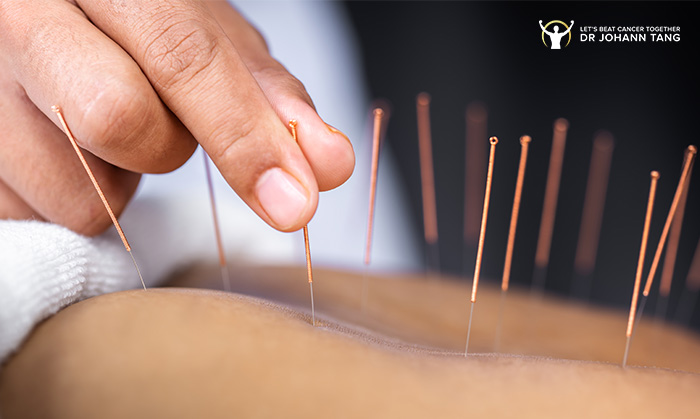
This article explores the relationship between acupuncture and cancer care, focusing on how acupuncture may support individuals experiencing discomfort during treatment. Join us as we explore common causes of cancer-related pain, how acupuncture may influence pain management, and what to consider before starting. Keep reading to learn how to discuss acupuncture safely with your oncology team.
-

Radiation therapy is one of the many treatment options in oncology, used to target and destroy cancer cells. Depending on the type and location of the tumour, different types of radiation therapy are available, each with its own advantages. If you or a loved one is considering radiation therapy, it’s essential to understand the various options to determine which one best suits your needs. Here’s a quick breakdown of the most common types of radiation therapy.
-
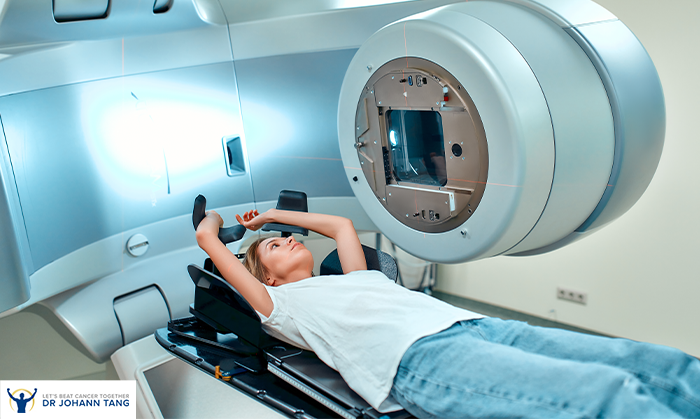
External Beam Radiation Therapy (EBRT) is a cancer treatment modality that utilises external radiation to kill cancer cells.
-

When a patient is diagnosed with cancer, it is understandable that they may consider alternative or complementary treatment for their cancer. One of these treatments is Traditional Chinese Medicine (TCM). However, is it safe to consume these medications during radiation therapy and cancer treatment? Let us explore the application of TCM in cancer treatment and radiation therapy to learn more.

Dr Johann Tang
Senior Consultant Radiation Oncologist
Medical Director of ME Novena Specialist Group Pte Ltd
MBBS (Aust), FRANZCR (Radiation Oncology)
Dr Johann Tang is the Senior Consultant and Medical Director of ME Novena Specialist Group Pte Ltd. at Mount Elizabeth Novena Hospital and an Assistant Professor at the Yong Loo Lin School of Medicine, National University Singapore.
Why Choose Dr Johann Tang for Cancer Treatment in Singapore
Dr. Johann Tang is a radiation oncologist and cancer doctor in Singapore providing radiation therapy and cancer treatment for different types of cancers. Treatment plans are developed based on the patient’s diagnosis, cancer type, and medical condition. Radiation therapy techniques and treatment options are discussed during consultation, together with follow-up care and treatment planning for patients undergoing cancer treatment in Singapore.
"I guarantee my very best expertise delivered with compassion and dignity as we journey TOGETHER to BEAT this dreaded illness."
Make An Enquiry
Got Queries? Book an appointment with Dr Johann Tang by filling up this form. We'll get on a call with you as soon as possible.
Prefer to talk? Call us directly at +65 6690 6811
or email us at drjohanntang@gmail.com
